About Tracing Ancestors in Barbados
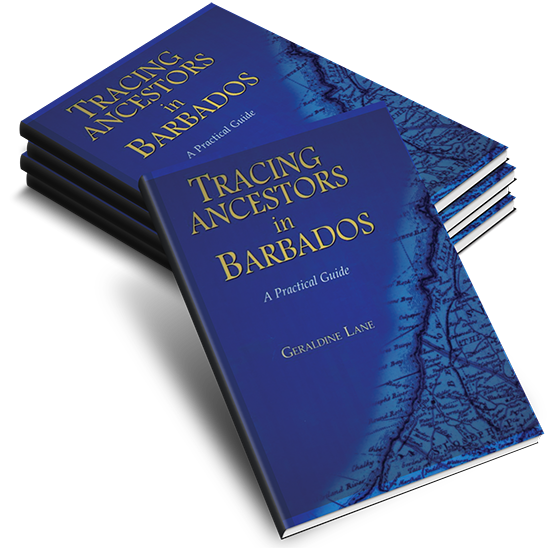
Barbados based researcher Geraldine Lane, who sadly died in March 2008, compiled a comprehensive guide to records held on the island. Details of the book can be found here, together with information on research services provided by Barbados based genealogy researchers. (Read reviews of Tracing Ancestors in Barbados here)
Records held in Barbados are good and the island's continuous ownership by Britain from 1627 to 1966 ensures continuity. By the 1650s sugar had made the island the wealthiest colony in the British Empire. Fortunes were to be made, and a variety of immigrants arrived, from sons of the wealthy to indentured servants. Convicts and political rebels were dispatched from the UK to Barbados, and the need for labour on the island's plantations gave rise to a trans-Atlantic trade in African slaves.
Many of the early white settlers and their descendants, among them disenchanted farmers and former servants, moved on to pursue new opportunities in other Caribbean islands and the Americas. This migration continued over the centuries as new opportunities arose. Following full emancipation in 1838, those formerly held in slavery joined the ranks of the emigrants; in the following years thousands headed for Trinidad, British Guiana, Suriname, and the Panama Canal project. Others went to Cuba, Costa Rica, Curaçao, Honduras and Nicaragua; by the 1920s the USA was the most popular destination.
Descendants of these people will find Tracing Ancestors in Barbados a comprehensive guide to all sections of society. It is designed to guide the reader through the many types of records and published sources that record the lives of the people of Barbados.